Glyphosate
What is glyphosate?
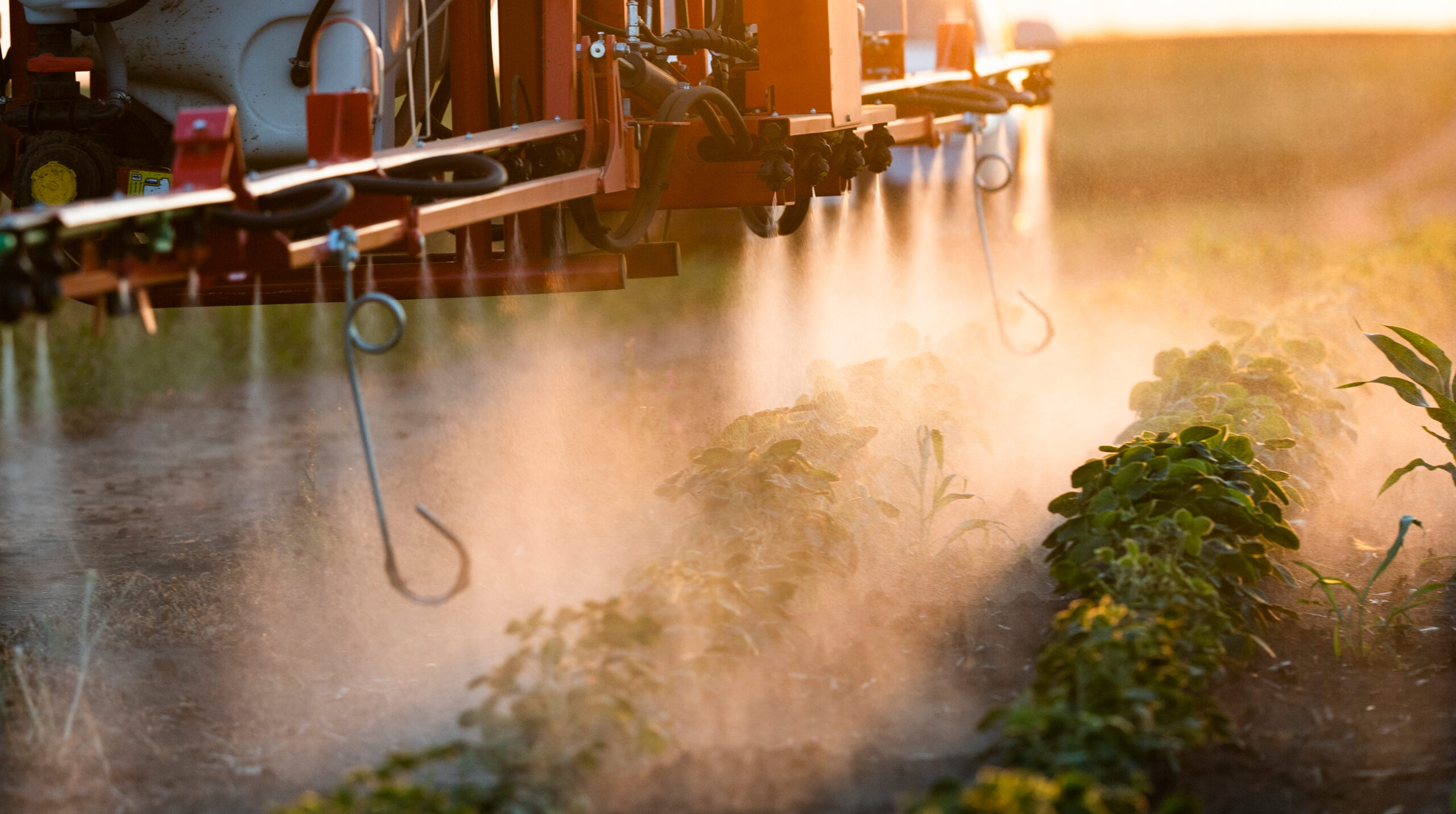
Glyphosate is a broad-spectrum herbicide used to control unwanted plants. In addition to its agricultural use, glyphosate may, under certain conditions, also be applied to non-agricultural areas such as railway tracks. In the European Union, the active substance is currently approved until 15 December 2033. However, its approval is subject to various conditions and restrictions.
As a result of its use, glyphosate and its main degradation product, AMPA (aminomethylphosphonic acid), may occur as residues in food and environmental samples. Due to their highly polar properties, these compounds require specialised analytical methods.
Glyphosate testing at a glance
•︎ Reliable glyphosate analysis based on the QuPPe method for highly polar pesticides
•︎ Suitable methods for complex sample matrices
•︎ Low limit of quantification of 0.01 mg/kg
•︎ Assessment of results against applicable product-specific requirements
•︎ Cereals and cereal products
•︎ Fruit and vegetables
•︎ Oilseeds
•︎ Products made from these raw materials
•︎ Environmental samples and selected non-food matrices upon request
Where can glyphosate residues occur?
Glyphosate residues are particularly relevant in cereals, pulses and oilseeds. In some countries outside the EU, glyphosate may be used before harvest to dry down crops and facilitate harvesting. This practice can lead to residues in harvested commodities and may therefore be relevant for products imported into the European Union.
Under current EU law, pre-harvest application for desiccation is not permitted if its purpose is to control the timing of harvest or facilitate threshing.
Residues may also occur in other matrices, for example as a result of spray drift, incorrect application or other routes of entry.
In addition to food, testing may also be relevant for environmental samples and selected consumer products.
Potential health and environmental effects of glyphosate
Few active substances used in plant protection have attracted as much public and scientific attention as glyphosate. One central aspect of the debate concerns its potential carcinogenicity.
The International Agency for Research on Cancer (IARC) classified glyphosate as “probably carcinogenic to humans” in 2015. By contrast, the European Chemicals Agency concluded that the available scientific evidence does not justify classifying glyphosate as carcinogenic, mutagenic or toxic to reproduction. EFSA’s most recent peer review did not identify any critical areas of concern, although it highlighted certain data gaps.
Environmental effects also form an important part of the assessment. In the EU, glyphosate is classified as toxic to aquatic life with long-lasting effects. Scientific questions also remain regarding potential indirect effects on biodiversity and food chains.
Against this background, the accurate determination of glyphosate residues remains important for manufacturers, retailers and other stakeholders throughout the food supply chain.
Why should products be tested for glyphosate?
The European Union has established maximum residue levels (MRLs) for glyphosate in food and feed. These MRLs define the highest legally permitted concentration for individual products when pesticides have been applied in accordance with good agricultural practice.
Analytical testing can help companies:
- Verify compliance with product-specific MRLs
- Identify residues at an early stage
- Assess the quality of raw materials and finished products
- Support supplier monitoring and quality assurance programmes
- Respond confidently to customer and retailer requirements
Toxicological reference values, including the Acceptable Daily Intake (ADI) and the Acute Reference Dose (ARfD), are also considered when evaluating potential consumer exposure.
For a substance that remains under close public and regulatory scrutiny, reliable residue data can provide valuable support for informed risk assessment and product quality decisions.
Glyphosate Analysis at GALAB
At GALAB, glyphosate is analysed using a method based on the QuPPe approach, which was specifically developed for highly polar pesticides.
For complex matrices, GALAB can also apply a method involving FMOC derivatisation. This provides an additional analytical option for challenging sample materials.
GALAB achieves a limit of quantification of 0.01 mg/kg. This enables the relevant maximum residue levels for food to be assessed.
By combining specialised methods for polar pesticides with a low limit of quantification and solutions for complex matrices, GALAB can reliably determine glyphosate in a wide range of samples.
Need support with glyphosate testing?
Would you like to test a raw material or food product for glyphosate? Our experts will be happy to advise you on the appropriate analytical approach for your sample matrix.


Parameters & Analytical Methods
-
State-of-the-Art Analysis
We constantly update our spectrum of parameters to the latest developments in the food analysis sector and offer state-of-the-art analytical methods for the safety of your products.
-
Comprehensive multi-methods
We are constantly expanding our range of services in order to be able to guarantee you a comprehensive range of analyses. We offer multi-methods for mycotoxins, dioxin analysis or molecular biological analysis for GMOs and allergens. The GALAB Pesticide500Plus® multi-method can even be used for difficult matrices such as spices and herbs.
-
Constant development
If you cannot find the parameter/analysis you are looking for here, please do not hesitate to contact us. Our research and development department implements your requirements and specifications cost-efficiently and with a high quality standard.
-
Quality Policy
GALAB Laboratories has implemented a quality management system to allow for optimum service for their customers. It is our goal to establish close relations to customers by customer satisfaction. Therefor quick reactions to customers’ specific needs as well as considerations for quality demands of the market are necessary. We strive to provide comprehensive and professional advice to our customers. Learn more
Get in touch, we will help you.