Endocrine Disruptors in Sanitary Products: Understanding the Risks
What Are Endocrine Disruptors?
Endocrine disruptors are chemicals that interfere with the body’s hormonal system, which regulates essential functions such as growth, metabolism, immunity, reproduction, and behavior. Unlike harmless endocrine-active substances, endocrine disruptors can cause harmful effects that may not appear immediately. For instance, exposure of a fetus in the womb may impact health in adulthood and potentially affect future generations. In wildlife, reproductive issues linked to endocrine disruptors have been observed in molluscs, crustaceans, fish, reptiles, birds, and mammals, sometimes leading to population declines. In humans, these chemicals have been associated with declining sperm counts, genital malformations, hormone-sensitive cancers, and possibly changes in neural development and sexual behavior.
Phthalates, Bisphenols, and Parabens: Uses and Health Risks
Phthalates, bisphenols, and parabens are well-known endocrine-disrupting chemicals which are widely used in consumer and personal care products due to their chemical properties, such as flexibility, durability, preservative action, and antimicrobial effects.Chronic exposure can affect the reproductive system and liver, and these chemicals can cross the placenta, accumulate in the body, and be absorbed via ingestion, inhalation, or skin contact, with dermal exposure being particularly relevant.
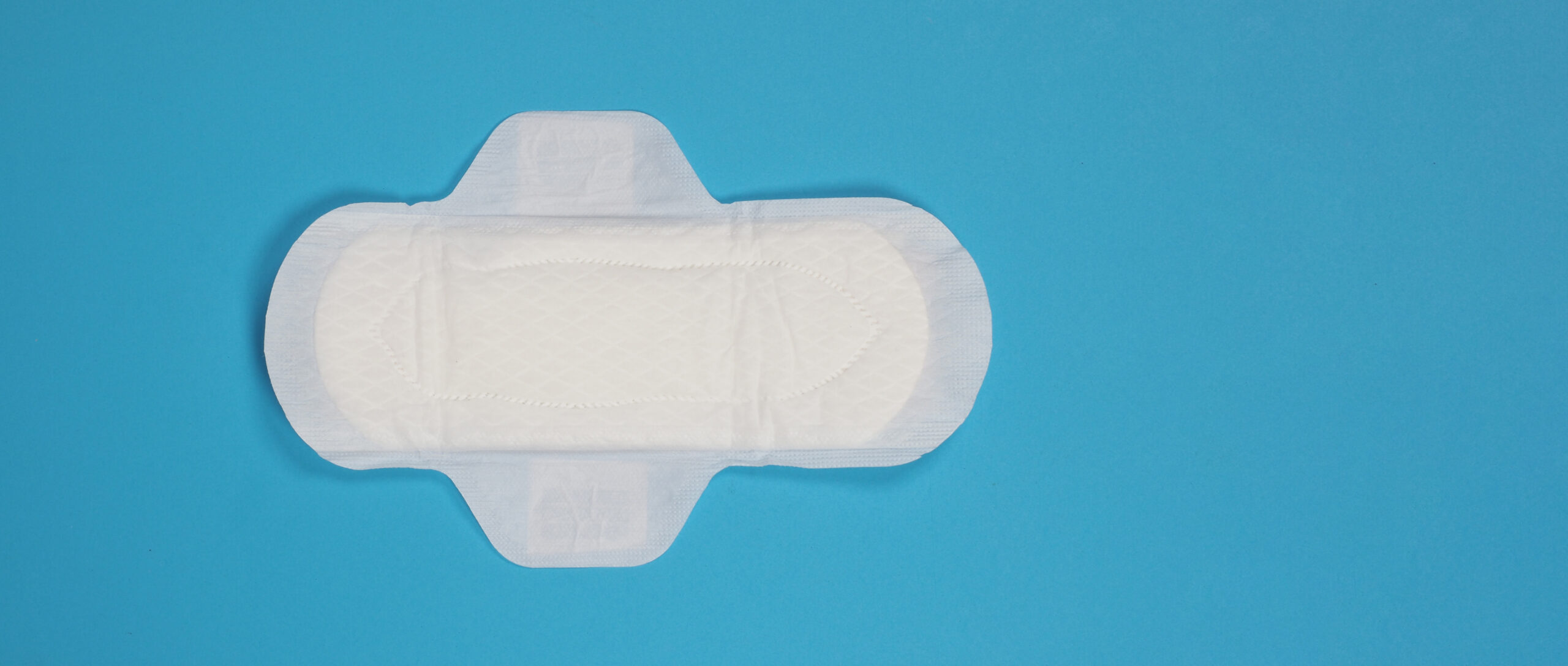
Sanitary pads and pantyliners are multi-layer absorbent hygiene products (AHPs) that come into direct contact with mucous membranes, which absorb chemicals efficiently. Given their prolonged and repeated use over decades, these products are a significant potential source of exposure to EDCs. Additionally, since phthalates, bisphenols, and parabens are not covalently bound to plastic polymers, they can leach into surrounding layers or absorbed fluids.
Regulatory Limits for Safety
To protect public health, regulatory bodies have established acceptable intake levels for these chemicals:
Pthalates
Phthalates are a large group of chemicals widely used as plasticizers and are known to potentially disrupt the endocrine system. As phthalates are not bound to their matrix, they can be easily transferred or leach into other substrates. This is notably the case for DEHP . Current risk assessments maintain a group tolerable daily intake (TDI) of 50 µg/kg body weight per day for several commonly used phthalates, including dibutyl phthalate (DBP), benzyl butyl phthalate (BBP), bis(2-ethylhexyl) phthalate (DEHP), and diisononyl phthalate (DINP). This limit is based on evidence showing that these substances can reduce testosterone levels during fetal development. The phthalate DIDP also retains its own separate TDI of 150 µg/kg bw per day, calculated based on its effects on the liver
Within the European Union, five phthalates are authorized for use in plastic food contact materials as plasticizers or technical support agents under the Plastics Regulation (EU) No 10/2011, although their use is subject to strict restrictions. In addition to individual migration limits for specific compounds, a group migration limit of 0.6 mg/kg of food applies to the combined presence of DBP, BBP, DEHP, and diisobutyl phthalate (DIBP), expressed as DEHP equivalents, to control cumulative exposure.
Parabens
Parabens are widely used as preservatives in cosmetics and personal care products, such as deodorants, to inhibit the growth of microorganisms and extend product shelf life. The World Health Organization (WHO) has established an acceptable daily intake (ADI) of 10 mg/kg body weight per day for parabens.
European legislation permits the use of parabens in cosmetic products, where one or several types may be present simultaneously. The maximum total concentration allowed is 8 g/kg of cosmetic product, with a limit of 4 g/kg for any individual paraben.
Following a review of the most recent scientific evidence, the Scientific Committee on Consumer Safety (SCCS) concluded that these limits are considered safe for short-chain parabens, particularly methylparaben and ethylparaben, when used within the established regulatory limits.
Bisphenols
Bisphenols are a group of chemicals used to produce polymers and resins that are widely applied in the manufacture of plastic materials. Common examples include Bisphenol A (BPA) and Bisphenol S (BPS). Because these substances can pose risks to human health and the environment, their use has increasingly been restricted in the European Union.
The European Food Safety Authority (EFSA) first evaluated BPA safety in 2006, establishing a tolerable daily intake (TDI) of 50 µg/kg body weight per day, defined as the amount that can be consumed daily over a lifetime without significant health risk. However, continued research and reassessment of BPA’s potential effects led EFSA to revise this limit. In 2023, EFSA published a final scientific opinion setting a much stricter TDI of 0.2 ng/kg body weight per day, which is 20,000 times lower than the original value.
Further regulatory action followed with Commission Regulation (EU) 2024/3190, published in December 2024 and entering into force in January 2025. This regulation prohibits the use of BPA and its salts in materials and articles intended to come into contact with food, as well as the marketing of such products within the EU.
Case: EDCs in South African Sanitary Products
In a recent study, sixteen sanitary pad brands and eight pantyliner brands sold in South Africa were analyzed for twenty endocrine-disrupting chemicals, including nine phthalates, five parabens, and six bisphenols. The values detected were assessed afterwards to evaluate whether the exposure exceeded satefy thresholds.
Parabens were found in most products, but their contribution to overall exposure was minimal. Exposure from pads and pantyliners was extremely low, around 0.00002% of the acceptable daily intake, indicating negligible risk.
Phthalates were detected in all pantyliners and half of the pads. Pantyliners showed higher total concentrations (104.15 ng/g) compared to pads (47.76 ng/g). Individual phthalate compounds remained below their acceptable daily intake limits; however, combined exposure reached 15.4% of the group limit for pads and 33.8% for pantyliners, suggesting that cumulative exposure could become relevant.
Bisphenols were highly prevalent in all products, with average total concentrations of 63.31 ng/g in pads and 66.68 ng/g in pantyliners. Bisphenol A (BPA) was the dominant compound. Estimated BPA exposure substantially exceeded the European Food Safety Authority tolerable daily intake of 0.2 ng/kg body weight per day, approximately 60 times higher for pads and 32 times higher for pantyliners. Considering combined exposure to all detected bisphenols, exceedance was even greater, reaching around 100 times the tolerable intake in pads and 65 times in pantyliners, highlighting a significant potential for exposure through these products.
These findings demonstrate that sanitary pads and pantyliners could be a significant source of endocrine-disrupting chemical exposure, and therefore it is recommended that consumers, regulators, and manufacturers take measures to reduce potential risks
How can GALAB Help
GALAB Laboratories can help you in the detection of compounds in personal care and consumer products. Using high-performance liquid chromatography coupled with tandem mass spectrometry (LC-MS/MS) for parabens and bisphenols, and gas chromatography–mass spectrometry (GC-MS) for phthalates, we can accurately measure chemical concentrations and asses your compliance. By partnering with us, ensure product safety, and protect consumers.
Sources
German Federal Institute for Risk Assessment (BfR). (17 March 2022.). Questions and answers on endocrine disruptors.
The Washington Post. (2 March 2026). South Africa probes sanitary products suppliers after study flags health risks.
Blignaut, J., Kemp, G., Erasmus, E., Visser, H. G., & Schutte-Smith, M. (25 February 2026). The presence of endocrine disrupting chemicals in sanitary pads: A study done in South Africa.



Parameters & Analytical Methods
-
State-of-the-Art Analysis
We constantly update our spectrum of parameters to the latest developments in the food analysis sector and offer state-of-the-art analytical methods for the safety of your products.
-
Comprehensive multi-methods
We are constantly expanding our range of services in order to be able to guarantee you a comprehensive range of analyses. We offer multi-methods for mycotoxins, dioxin analysis or molecular biological analysis for GMOs and allergens. The GALAB Pesticide500Plus® multi-method can even be used for difficult matrices such as spices and herbs.
-
Constant development
If you cannot find the parameter/analysis you are looking for here, please do not hesitate to contact us. Our research and development department implements your requirements and specifications cost-efficiently and with a high quality standard.
-
Quality Policy
GALAB Laboratories has implemented a quality management system to allow for optimum service for their customers. It is our goal to establish close relations to customers by customer satisfaction. Therefor quick reactions to customers’ specific needs as well as considerations for quality demands of the market are necessary. We strive to provide comprehensive and professional advice to our customers. Learn more
Get in touch, we will help you.